System 01
Why thermal surveillance matters
Thermal imaging measures heat contrast rather than depending only on visible light. It can extend situational awareness during night operations and in environments where conventional RGB imagery is limited.
thermal surveillance drone
Combine thermal sensing, onboard AI, planned patrol routes, telemetry, and human supervision for difficult visibility conditions.
Mission capability
Aeroniti configures thermal surveillance drones for night monitoring, human detection, intruder detection, animal detection, perimeter patrol, and operator-supervised response.
How the system works
Each layer is configured around the aircraft, operating environment, sensor stack, safety requirements, and level of human supervision.
Thermal imaging measures heat contrast rather than depending only on visible light. It can extend situational awareness during night operations and in environments where conventional RGB imagery is limited.
Onboard models can evaluate thermal and RGB feeds for people, animals, and mission-specific classes, then send detections and supporting imagery to the operator.
The thermal stream enters the onboard Jetson compute layer, where inference results are combined with location, mission stage, and other sensor information to generate an alert or bounded response.
Potential workflows include perimeter patrol, industrial security, farm monitoring, low-light search, and observation in haze or light smoke where conditions and selected sensors permit.
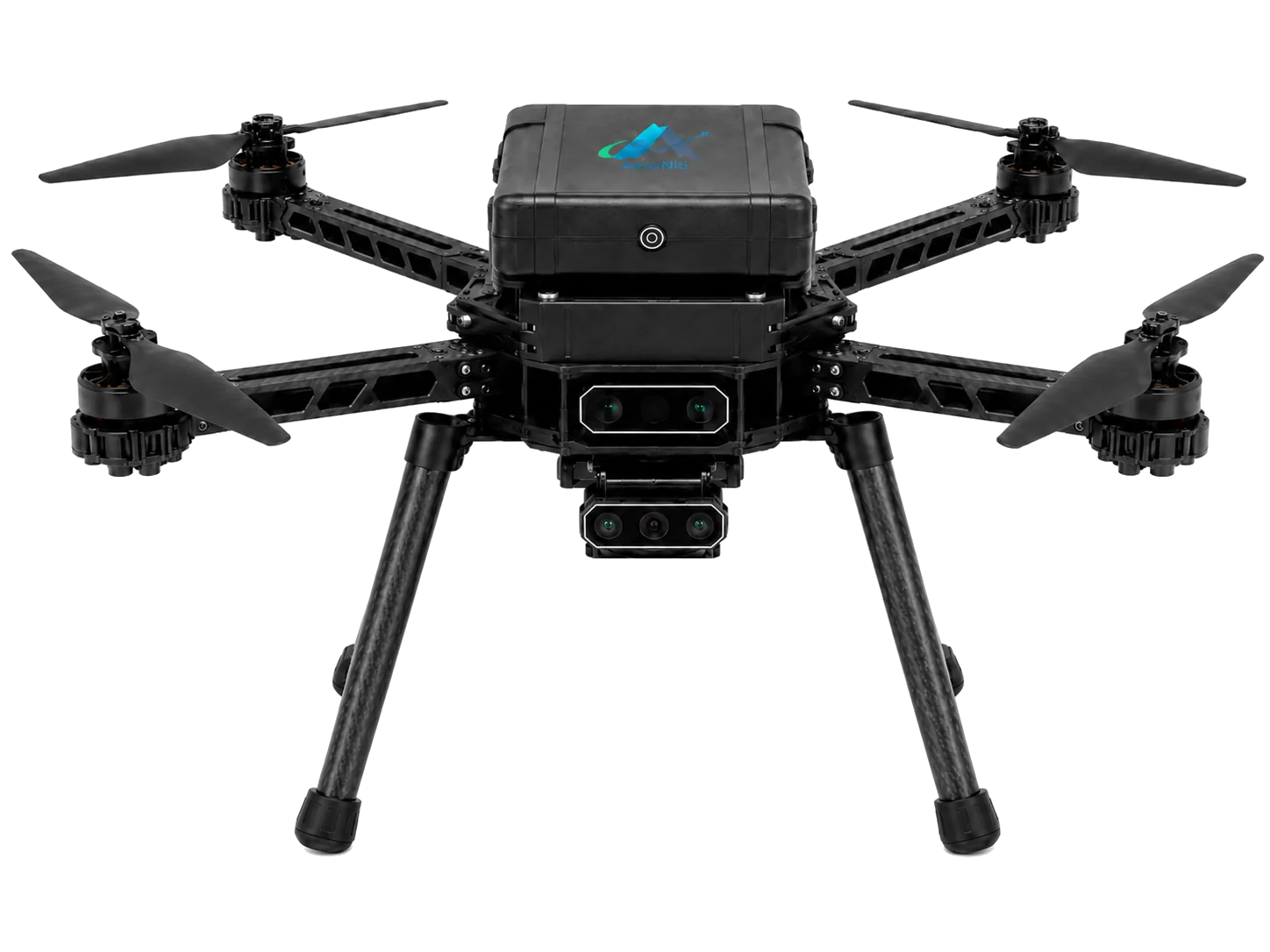
Aeroniti Sentinel can combine a thermal camera, RGB or AI camera, depth sensing, Jetson Orin Nano, Pixhawk 6C, ArduPilot, telemetry, and planned patrol software.
Detections support the operator; they do not replace operational judgment. Live video, telemetry, geofence, return-to-launch, and human intervention remain part of the mission architecture.
Frequently asked questions
Practical answers for teams assessing an Aeroniti mission configuration.
A configured system can assist with human, intruder, animal, and heat-signature detection, subject to sensor range, environment, model performance, and operating conditions.
Yes. Thermal cameras use heat contrast and can provide useful imagery without visible daylight.
Thermal imaging may help in some haze or light-smoke conditions, but performance depends on smoke density, temperature contrast, sensor selection, and distance.
Sentinel can be configured around planned patrol routes with telemetry and operator-supervised autonomous execution.
No detection system is perfect. Aeroniti designs these outputs as decision support with operator review and mission-specific testing.
Request demo
Share the mission, aircraft, operating environment, sensors, payload, safety constraints, and expected outcome. Aeroniti can define a focused integration and field-validation path.